The ensemble of the Basilian Monastery with the Church of the Holy Trinity is one of the most ancient architectural monuments of Vilnius. According to legend, the first wooden church was built in the fourteenth century by Princess Julian at the place of death in 1347 of Anthony, John and Eustathius, the nobles of Olgerd, the first martyrs for the Christian faith and the first Christian saints in Lithuania. Princess Juliana was the daughter of Grand Duke of Tver and Anastasia Halytska, as well as the wife of Grand Duke of Lithuania Olgerd.
The stone church of the Holy Trinity with the bell tower was built in 1514 by Prince Constantine Ostrozky, the great Lithuanian hetman, the Vilnius castellan and the Thracian governor, in gratitude for the victory of the Lithuanian-Polish troops over the Moscow army near Orsha. According to legend, the first church was on the site of the main altar of the new stone church.
The church was built in the Gothic style and today has preserved the three-line planning with semicircular altar-shaped projections, apse on the east side. In the first half of the seventeenth century, three chapels were added. The first, located to the right of the main entrance, the chapel of the Annunciation of the Blessed Virgin, was built at the expense of Janusz Skumin-Tyszkiewicz (1570-1642), a descendant of the noble Tyszkiewicz family. In the dungeons of the chapel is buried the father of the founder, Novgorod governor Theodor Skumin, the founder himself and his wife Barbara Narushevich, who died in 1627. The marble tombstone of the work of Italian masters is preserved in the chapel. Nowadays the Byzantine rite of worship is constantly held in this chapel.
The second chapel, located to the left of the main entrance of St. Luke, was built in 1622 at the expense of Eustachius Korsak-Hlybotsky. In addition to the founder himself, in the crypt under the chapel rest his sons Ivan and Gregory. This noble family of Korsakov also includes the Archimandrite of the Vilnius Basilian Fathers Monastery Raphael Mykola Korsak (1601-1640), later – the protoarchimandrite of the Basilian Order, the Kiev Metropolitan of Catholics of the Eastern Rite.
The third chapel is the Exaltation of the Holy Life-giving Cross of the Lord. The founder of this chapel in 1628 was the clerk of the Grand Duchy of Lithuania Jan Kolenda. Valuable tombstones have been preserved in the church. A unique monument of the Renaissance in Lithuania is the tombstone of Vilnius burgomaster Athanasius Braga and his son Anthony with a coat of arms, an inscription on the Cyrillic alphabet and a rich floral ornament dating from thousands of five hundred seventy-six years. The tomb of the Sisters of Elen with the sentimental inscription of 1758 draws attention. In 1670 considerable funds for the restoration of the church were allocated by the Great Hetman Lithuanian Patz and the chief treasurer, Jerome Krishpin Kirshenstein, in particular, for the erection of the altar of St. Josaphat Kuntsevich.
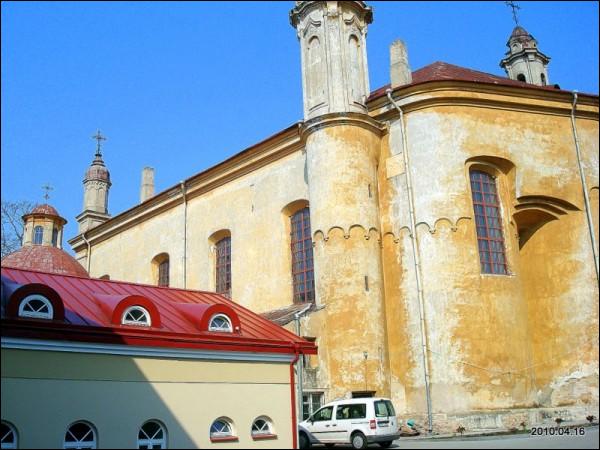
After the fires of 1706, 1748 and 1760, the church was significantly rebuilt. The restoration work was led by the well-known Wilno architect Johann Christophe Gliubit. Then the church was extended, windows were enlarged, and two towers were built on the east facade. The church stands in the middle of a courtyard surrounded by three-story monastery buildings of the late XVIII – early XIX centuries.
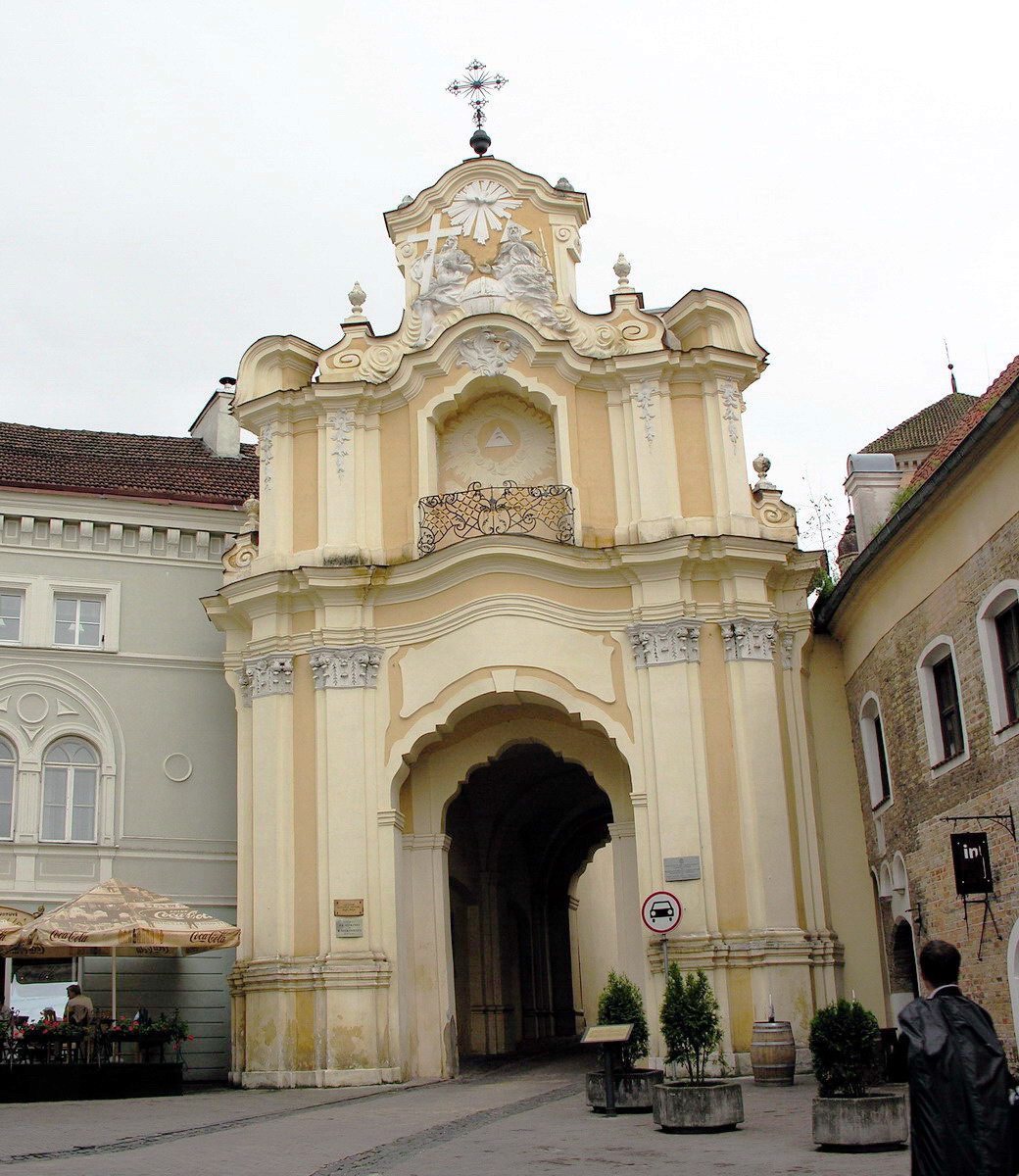
A valuable architectural monument of the Vilnius Monastery is undoubtedly the entrance gates of the monastery from Aušros Vartų. They were built according to the design of Johann Christophe Gliubitz in 1761 with a three-storey façade in the late Baroque style, bordering on Rococo.
After the collapse of the Polish–Lithuanian Commonwealth in 1795 and the occupation of Lithuania by tsarist Russia, real repression against the Uniates began: the Basilian monasteries were abolished, the churches were converted to Orthodox, and Greek Catholics were massively and forcibly converted to Orthodoxy. Part of the monastery premises is converted into prison by the royal authorities. In 1823, members of the student underground organization of Vilnius University became its first prisoners. Among them was the famous poet Adam Mickiewicz, as evidenced by the memorial plaque on the wall of the monastery. In this prison were members of the uprising of 1831 against the Russian Empire. One of the emissaries of Simon Konarsky’s emigration anti-tsarist movement in 1839 was led to execution.
In 1845 the Orthodox seminary was transferred to the former monastery premises. In 1867-1869 under the leadership of the Russian architect Nicholas Chagin began a major restructuring of the Basilian complex. First of all, they tried to change the appearance of the Church of the Holy Trinity. The towers were rebuilt, the arches were made on the facade, a wooden dome was built in accordance with the tradition of the Orthodox Church. But the most significant works were carried out in the monastery buildings. Only the outer walls were left, the interior space was rebuilt.
Since June 1923, Greek Catholic services have been renewed in the Church of the Holy Trinity during the holidays, and in the walls of the monastery there are a number of organizations sheltered by the Basilians – the Union of Polish Writers, the Polish Tourist and Local History Society, the Belarusian Society of Belarus.
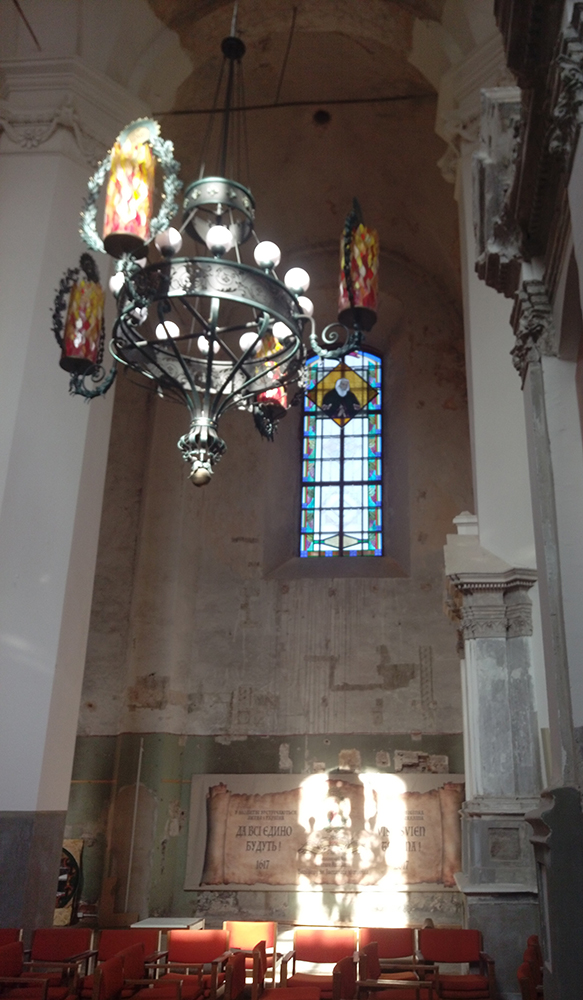
During the Soviet rule, they close the church and give the monastery premises to the Pedagogical Institute of the Vilnius Branch of Kaunas Polytechnic, which would later become a technical university. Workshops were held in the church and then a vibration laboratory. Traces of the equipment are still preserved on the floor and walls of the church. The old walls were shaking with vibration, the altar was destroyed, chapels and tombs were polluted.
In 1991, the Lithuanian government returned the Holy Trinity Church to the Basilians and legalized the Greek Catholic Church as one of the nine traditional denominations in the Republic of Lithuania. After many years of patience, sorrow, and horrific persecution, the Basilian Fathers preach the Word of God in the temple of the Holy Trinity.

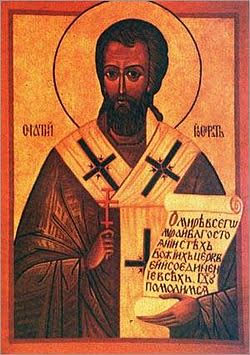
The names of St. Josaphat Kuntsevich, Archbishop of Polotsk, as well as the great reformer of the Basilian Order Joseph Velyamin Rutsky are connected with the history of the monastery.
Saint Josaphat Kuntsevich was born in 1580 in Volodymyr Volynsky, named after his god name Ivan. His father Gabriel wanted his son to become a merchant in the future, so he gave him to study science. However, as a child, as a child, praying before the crucifixion of Christ in the church, he received from him a miraculous spark in his heart that sparked him with lifelong love for God and the Church.
In 1604, at the age of 24, Ivan Kuntsevich joined the Holy Trinity Monastery in Vilna and was given the monastic name Josaphat. With no spiritual leaders in the monastery, nor a good example, Jehoshaphat turned to the liturgical books and rules of St. Basil the Great to find signs in the path to holiness. The example of the monk Jehoshaphat soon began to inspire other young men who left the worldly life and led the way of life that Jehoshaphat led. Among them was the young theologian Velyamin Rutsky, who later, along with Josaphat, became a reformer of the Basilian Order.
In 1609 Jehoshaphat was ordained a priest. In 1613 Metropolitan Ipatius Potius died and V. Rutsky was elected in his place, and Hieromonk Jehoshaphat became abbot of the Holy Trinity Monastery, with more than 50 monks already living. With great zeal, Jehoshaphat worked to renew the monastic life and to work diligently among the laity, teaching them the truths of the faith and calling for church unity.
Ivan Velyamin was born in the village of Ruta, near Novgorod, in Belaya Rus, in 1574. His father, Felix Velyamin, came from Muscovy, where he moved to Belarus, avoiding persecution from Ivan the Terrible and there, received from the Polish King Sigmund August Rutir. Since then, Velyamin’s family changed her name to Rutsky.
During his studies at the Greek college, after much hesitation, Rutsky accepted the Eastern rite here, although he knew about the sad state of the Ukrainian Church. In this decision, he was influenced by a conversation with Pope Clement VIII, who had previously brought the Ukrainian Church into unity with the Ecumenical Catholic Church. In 1603 Rutsky graduated from theology in Rome, and went to Belarus with the will of the Pope, where he was to work on the consolidation of only the accomplished Union.
While in Rome, he presented to the Holy Father a program of uniting the Churches. In addition to the eastern branches of Latin ranks, he also proposed reform of the Order. Returning to Vilnius, Rutsky caught his friend Kuntsevich in the Holy Trinity Monastery as a monk of Jehoshaphat. The holiness of this young monk fascinated Rutsky. He then realized that the condition of the Ukrainian Church would immediately improve when the younger generation of the Order was brought up on his example.
Receiving the call from Christ on September 7, 1607, Ivan Rutsky entered the Holy Trinity Monastery in Vilnius. The next day he adopted the monk’s cassock and the new monk’s name Joseph with Metropolitan Poti. He made a monastic vow on January 1, 1608, and experienced extraordinary calm, making sure that the Greek rite and the Ukrainian Church became his native.
Metropolitan Rutsky died on February 5, 1637 in Derman. He was buried in Vilnius, where in 1655 Moscow troops took his coffin to an unknown place.